
Are Traditional Wedding Timelines Dead? How to Design a Reception Flow That Actually Feels Like You

You've scrolled through enough wedding timelines to notice a pattern. Grand entrance at 6:15. First dance at 6:30. Toasts during salad course. Cake cutting at 8:45. Every reception moving through the same choreographed checklist, regardless of whether the couple getting married loves classic romance or would rather skip half of these traditions entirely.
Here's the truth: traditional wedding timelines aren't dead: they're just evolving. The couples who create the most memorable receptions in 2026 aren't throwing structure out the window. They're reimagining it completely, building a flow that reflects who they actually are rather than copying what worked for someone else's parents in 1995.
From Checklist to Curated Experience
The fundamental shift happening in modern weddings is a change in mindset. Instead of viewing your reception as a series of mandatory events to survive, think of it as a carefully designed story with emotional peaks and valleys. This means keeping the structural anchors: cocktail hour, dinner, special dances, open dancing: but customizing their pacing, order, and energy based on what genuinely matters to you.
This is where your wedding DJ becomes something far more valuable than a person who plays requested songs. A skilled wedding MC and DJ acts as the architect of your entire evening's energy. They're reading the room in real time, sensing when to pull guests onto the dance floor versus when to create a quieter moment for connection. They're transitioning between your ceremony and reception with intentional pacing rather than rushing through a script.
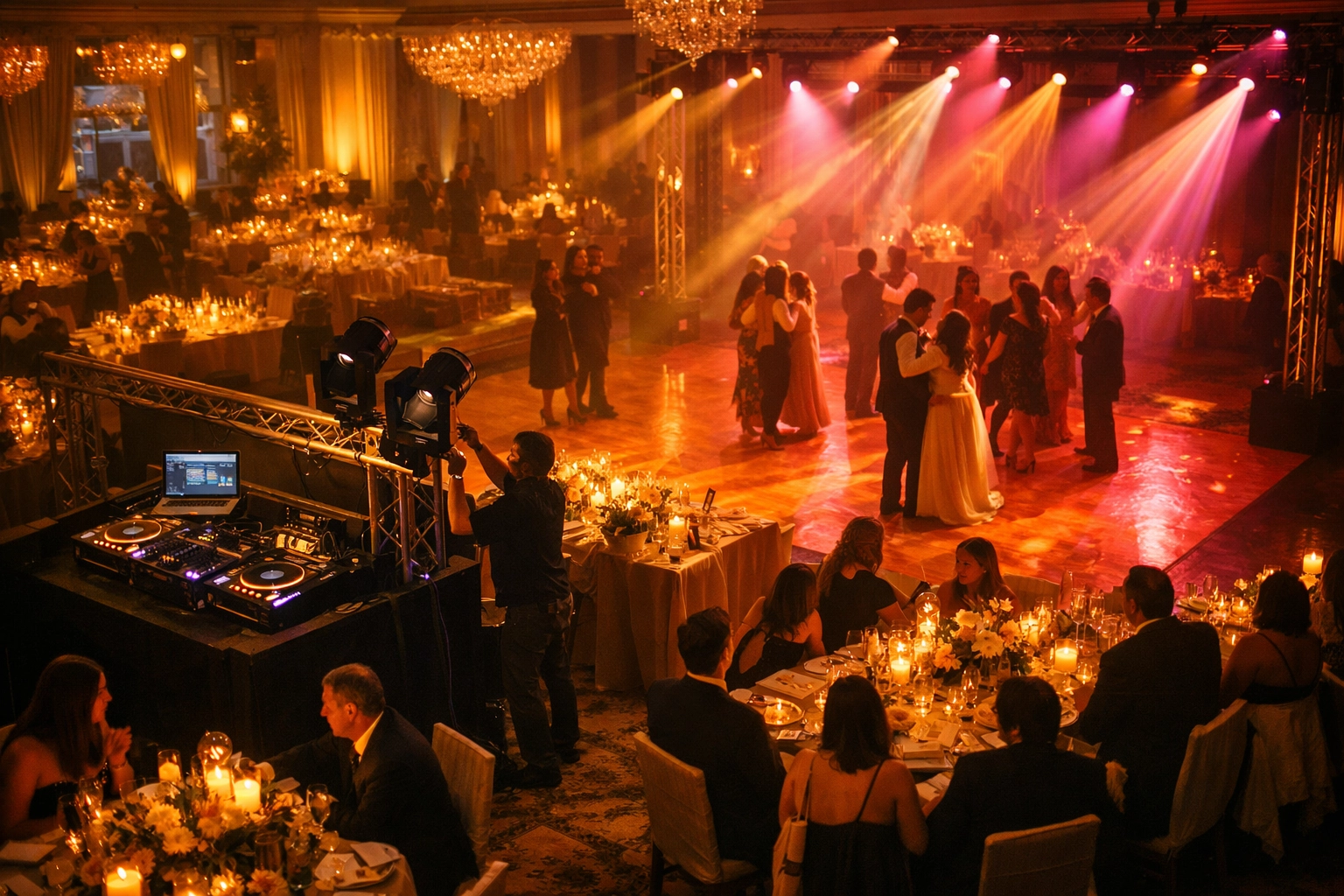
The couples who work with luxury wedding DJ services understand this distinction immediately. You're not hiring someone to press play on a Spotify playlist. You're collaborating with an experience curator who helps you map out how the night should feel as it unfolds.
The Anchors You Actually Need
Let's get practical. Certain elements of your timeline aren't flexible: and pretending they are leads to chaos, not creativity. Your venue has hard start and end times. Your catering team needs to serve dinner during a specific window. Your photographer needs golden hour for certain shots. These are your true anchors.
Build around these constraints rather than fighting them. A typical reception still includes:
Cocktail hour: 45-60 minutes allowing guests to mingle while you capture family photos
Grand entrance and welcome: 5-10 minutes establishing the evening's tone
Dinner service: 90 minutes to 2 hours, depending on your meal style
Special dances and meaningful moments: 15-20 minutes, though timing should follow the emotional flow
Open dancing: 90 minutes minimum as your actual party
The magic happens in how you sequence these elements and what happens between them.
Lighting as Your Secret Timeline Tool
Here's something most couples completely overlook: wedding lighting design is the most powerful tool you have for signaling transitions without saying a word. This is why working with a dedicated Lighting Engineer: not just a DJ who brings some uplights: transforms your reception flow from predictable to immersive.
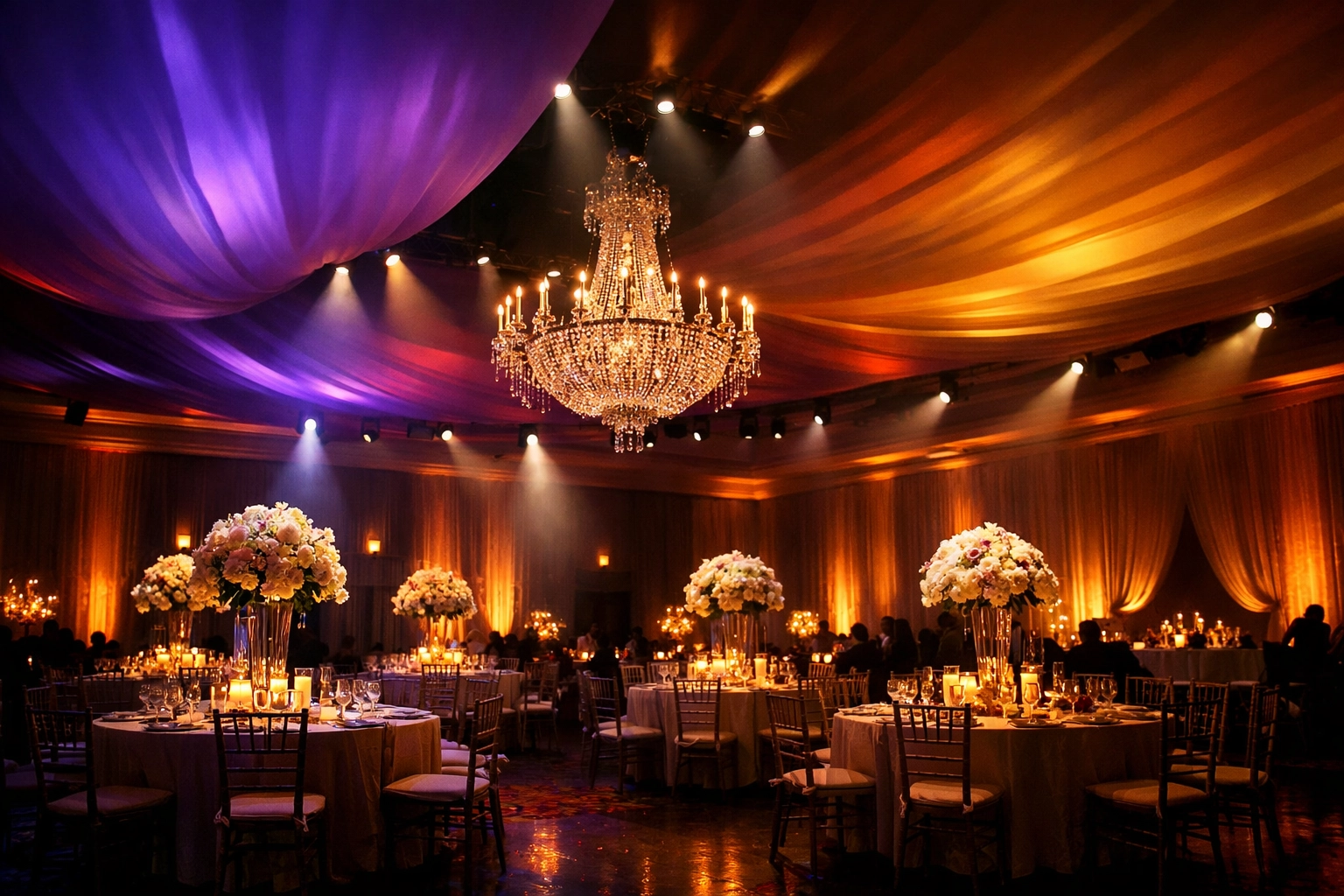
Think about how lighting shapes every moment of your evening. During cocktail hour, warm ambient lighting creates an intimate, conversational atmosphere. As dinner begins, subtle shifts in color temperature help guests settle into their seats without an announcement. When it's time to transition into dancing, a deliberate lighting change: brighter, more colorful, more dynamic: subconsciously tells everyone the energy is shifting.
Your wedding lighting design becomes a visual cue system. Soft romantic tones during your first dance. Dramatic spotlights for toasts that matter. Vibrant, energetic patterns when the dance floor opens. You're essentially designing an emotional roadmap that your guests follow instinctively, without feeling herded through obligatory events.
This is exactly why Onyx & Ice Entertainment includes a dedicated Lighting Engineer as part of our core team. We don't treat lighting as an afterthought or add-on. It's integrated into every conversation about your reception flow from day one, helping you understand how color, intensity, and movement patterns can make your timeline feel seamless rather than segmented.
Breaking the Cookie-Cutter Mold
So what does a truly personalized timeline actually look like? It starts with honest conversations about what you actually want versus what you think you're supposed to want.
Consider delaying your first dance. Traditional timelines place it immediately after the grand entrance, when many guests are still finding their seats or getting drinks. Move it to after dinner, and it becomes the natural bridge between the formal portion of your evening and the party. Your guests are settled, emotionally present, and ready to cheer you on: then immediately join you on the dance floor.
Rethink the toast structure. Instead of interrupting courses with speeches, some couples designate a single 15-minute toast window between dinner and dancing. Your wedding MC can introduce each speaker with proper buildup, creating moments that feel significant rather than squeezed between bites.
Integrate cultural traditions authentically. If your background includes specific dances, rituals, or celebratory customs, your timeline should accommodate these as featured moments rather than rushed afterthoughts. A skilled wedding DJ who understands how to weave cultural elements into contemporary flow makes these traditions accessible to all your guests, not just those who recognize them.
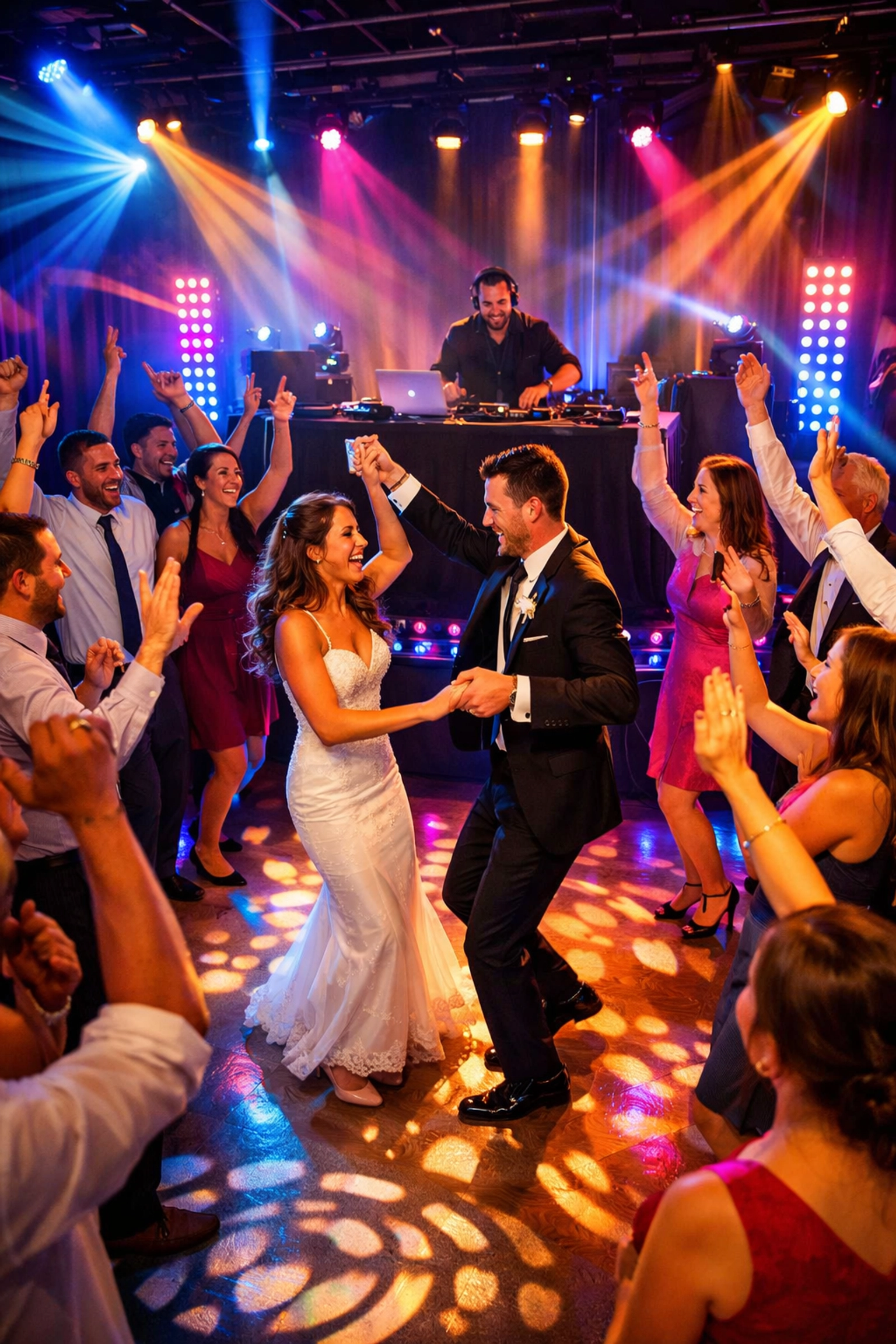
Design your energy arc intentionally. Maybe you want your reception to start with high energy and gradually become more intimate. Or perhaps you prefer a slow build that crescendos in the final hour. There's no right answer: only the answer that reflects your personality as a couple. This is where working directly with your entertainment team, rather than through a coordinator who's never met your DJ, makes an enormous difference.
The Direct Collaboration Advantage
Here's a question worth asking any luxury wedding dj you're considering: Will you actually be working with the person who performs at your wedding, or with a salesperson who hands you off to whoever's available that date?
At Onyx & Ice Entertainment, you work directly with your DJ and Lighting Engineer from your first consultation through your final dance. This direct collaboration means your timeline isn't built from a template we've used a hundred times. It's designed specifically around your vision, your venue's quirks, your family dynamics, and your ideal guest experience.
When you're mapping out your reception flow three months before your wedding, you're talking with the same person who will be reading your crowd in real time on the actual day. They understand why you're skipping the bouquet toss. They know your grandfather wants to give a surprise toast. They've heard you explain that your college friends need zero encouragement to dance, but your corporate colleagues might need a gentle push.
This continuity transforms your timeline from a rigid schedule into a flexible framework. Your wedding MC isn't following a script: they're executing a vision they helped you create.
Building Your Personal Timeline
Ready to design your own flow? Start with these questions:
What moments matter most to you? Not to Pinterest or your family or tradition: to you specifically. Maybe you don't care about a grand entrance but want an extended father-daughter dance. Maybe you'd rather skip cake cutting entirely and surprise guests with a dessert hour. Identify your non-negotiables first.
How do your guests actually socialize? If your crowd loves sitting and talking, you might want a longer dinner with entertainment woven in. If they're natural dancers, get them on the floor earlier and keep them there longer. Your timeline should match your specific group's energy patterns.
What's your venue's personality? A historic ballroom suggests different pacing than a rustic barn or a modern rooftop. Your timeline should work with your space's natural atmosphere rather than fighting it.
When do you want your emotional peaks? Space out the biggest moments: your first dance, parent dances, meaningful toasts: so each one gets proper emphasis. Clustering them all within thirty minutes dilutes their impact.
Work through these questions with your entertainment team, your photographer, and your caterer. Everyone should understand not just what's happening but why and how it connects to the overall experience you're creating.
Your Reception, Your Rules
The most important thing to understand about modern wedding timelines is this: structure serves you, not the other way around. The goal isn't to eliminate traditional elements out of rebellion. It's to intentionally choose which traditions enhance your celebration and which ones you're keeping out of obligation.
When you work with a professional wedding DJ who understands this philosophy: someone who views their role as energy curator rather than playlist operator: your timeline becomes a tool for creating the exact atmosphere you want. Add in thoughtful wedding lighting design that reinforces every transition, and you have a reception that flows so naturally your guests don't even notice there's a structure underneath.
They just know they had an incredible time at a wedding that felt completely, authentically you.


Comments